
 EN
Weather Protection Starts With the IP Code, Not the Marketing Copy
A party box that leaves the living room and heads outside faces rain, dust, pool splash, and temperature swings. The IP code, defined in IEC 60529, is the first thing to read carefully. The first digit covers solids, and the second covers liquids. An IPX4 rating handles splashes, IPX5 handles water jets, and IPX7 survives temporary immersion at one meter for thirty minutes. An X in the first position means dust protection was not tested, which is common on budget outdoor speakers. For a backyard party, IPX5 is usually enough. For beach, pool, or boat use, IPX7 is the safer target. Heat matters too. A dark grille in direct sun can push internal temperatures far above ambient, and that shortens lithium battery life. A light cabinet color or a shaded placement helps more than most spec sheets admit.
Battery Life That Matches a Long Outdoor Day
Outdoor celebrations rarely end after two hours. A birthday lunch can stretch into dinner, and a beach gathering can run from afternoon into night. Battery claims need to be read with the test conditions in mind. Many ratings are measured at half volume with Bluetooth on and lights off. Real use adds volume, bass, and LED effects. Cold weather is another factor. Lithium-ion capacity can drop by 20 to 30 percent in low temperatures, according to common battery research. A practical target is eight to twelve hours for an outdoor party box, plus a buffer. Fast charging helps, but a USB-C power bank or a spare battery can be more useful than a larger internal cell. If the box also serves indoor events, four to six hours may be fine for those days, but the outdoor number should drive the purchase.
Sound Pressure and Coverage for Open Air
Open air eats sound. There are no walls or ceilings to reinforce low frequencies, and background noise from traffic, wind, and conversations raises the effective noise floor. A party speaker that hits 90 dB in a living room may struggle to cover a 100-person backyard. Continuous RMS power and sensitivity matter more than peak wattage. A high-sensitivity design with 80 watts RMS can outperform a 200-watt peak unit with a weak horn. Coverage also depends on driver size and dispersion. A single 6.5-inch woofer can work for a small patio, while a 10-inch or 12-inch woofer with a wide horn covers a larger field. The table below shows typical targets for indoor and outdoor celebrations.
| Factor | Indoor celebration | Outdoor celebration |
|---|---|---|
| Target continuous SPL | 85 to 95 dB | 95 to 105 dB |
| Battery runtime | 4 to 6 hours | 8 to 12 hours |
| IP rating | IPX0 to IPX4 | IPX5 to IPX7 |
| Wireless range | 10 meters | 20 to 30 meters |
| Typical woofer size | 4 to 6.5 inches | 6.5 to 12 inches |
| Weight range | 3 to 8 kg | 8 to 20 kg |
Connectivity and Control in a Crowded Space
Bluetooth is standard, but version and antenna design decide whether the connection holds. Bluetooth 5.3 and later improve stability and reduce latency, which matters when phones move around and bodies block the signal. The Bluetooth SIG notes that range depends on power class, antenna design, and obstacles, so a 100-meter claim is often optimistic in a real yard. A useful outdoor party box should offer more than one input. Bluetooth, a 3.5 mm aux jack, and a USB-C or microSD slot give fallback options when a phone dies or a guest wants to share a playlist. Party linking is another feature to test. If two boxes are paired for stereo, the wireless link should work without a router and keep latency low enough for video. A delay above 200 ms is noticeable when a screen is involved.
Portability, Chassis, and Real-World Durability
A party box can sound excellent and still fail the outdoor test if it is miserable to move. Weight distribution, handle design, and wheel quality matter as much as the driver. A 15 kg box is manageable for a short carry, but a 30 kg box on small wheels can be dangerous on stairs or gravel. Trolley outdoor speakers solve some of that problem, though they add weight and can rattle if the chassis is not braced. For mixed indoor and outdoor use, a 10 to 18 kg box with a sturdy top handle and optional wheel kit is often the sweet spot. The chassis should also resist vibration. During an outdoor wedding setup on a humid coastal site, an audio crew found that a budget party box with an IPX4 label developed corrosion around the USB port after two nights of sea air and condensation. The driver still worked, but the charging port failed. Switching to a sealed IPX6 unit with a covered port solved the issue, and the same speaker handled an indoor brunch the next morning without sounding muddy.
Features That Earn Their Place, and Features That Do Not
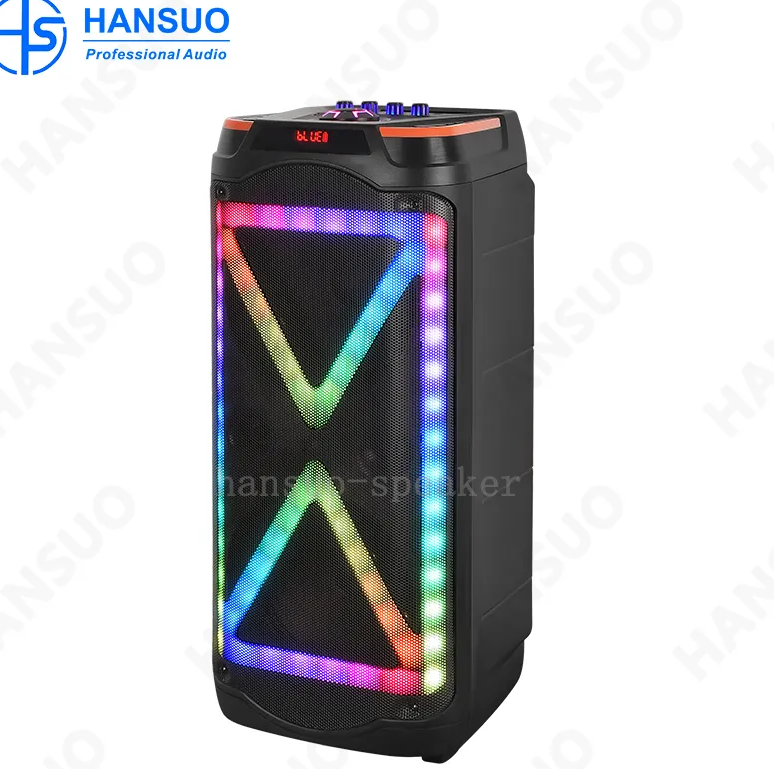
Not every feature improves an outdoor party. Useful ones include a sealed port cover, a sturdy handle, a tripod mount, and a battery indicator that can be read in daylight. A built-in light show can be fun, but it drains battery and may attract insects. A microphone input is helpful for toasts and announcements, while a guitar input is less useful unless live music is planned. A mobile app can add EQ control, but it should not be required for basic playback. Buyers should also check the operating temperature range and the charging time. A box that takes six hours to charge and runs for eight hours may not fit a weekend trip without a spare battery. The final check is simple: match the feature list to the actual event, not the spec sheet. For buyers sourcing at scale, Hansuo in Guangzhou has built manufacturing depth around waterproof outdoor portable speakers, trolley outdoor speakers, and wireless audio systems, with supply chain and quality control processes that serve global customers.
Table of Contents
- Weather Protection Starts With the IP Code, Not the Marketing Copy
- Battery Life That Matches a Long Outdoor Day
- Sound Pressure and Coverage for Open Air
- Connectivity and Control in a Crowded Space
- Portability, Chassis, and Real-World Durability
- Features That Earn Their Place, and Features That Do Not