
 EN
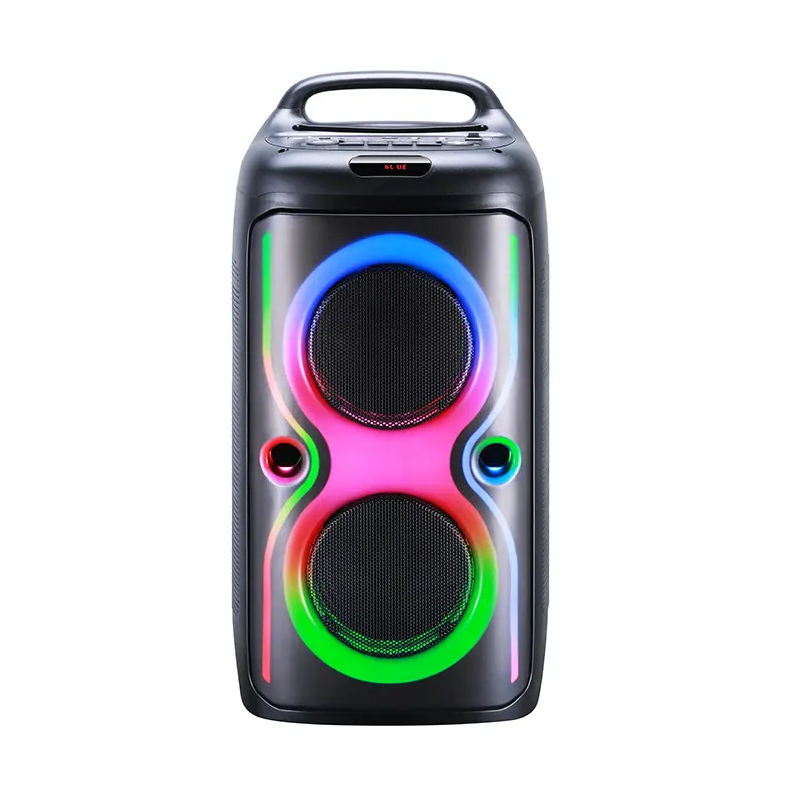
Start With the Room Before the Spec Sheet
Choosing a party box starts with a simple question: where will it actually play? A unit that sounds great in a 30-square-meter living room can feel thin and strained in a 200-square-meter backyard. The opposite is also true. A large outdoor box with a boomy low end can overwhelm a small indoor space and annoy neighbors before the party gets going. The first step is to map the two environments honestly. Indoor events usually have walls, ceilings, and furniture that reinforce bass and reduce the need for extreme output. Outdoor events have open air, background noise from traffic or wind, and no reflective surfaces to help the sound. That difference changes power requirements, battery life, and even the type of driver that makes sense.
Power, Battery, and the Reality of Outdoor Playback
Manufacturers love to print peak wattage on the box. Peak numbers are not useless, but they rarely tell the full story. For a party box that moves between indoor and outdoor use, continuous RMS power and sensitivity matter more. A speaker with 80 watts RMS and high sensitivity can often play louder and cleaner than a 200-watt peak unit with a poorly designed horn. Battery life is the next trap. Indoor use might only need four to six hours, because a wall outlet is usually nearby. Outdoor use is different. A full afternoon and evening event can easily run eight to twelve hours, and cold weather can cut lithium-ion capacity by 20 to 30 percent. A useful rule: pick a battery that covers the longest event plus two hours of buffer. Fast charging is nice, but a spare battery or a power bank with USB-C PD can be more practical than chasing a bigger internal cell.
Water, Dust, and Heat: What IP Ratings Actually Tell You
Water and dust protection is where many party box buyers get confused. The IP code comes from IEC 60529, and the two digits mean different things. The first digit covers solids, and the second covers liquids. An IPX7 rating, for example, means temporary immersion at 1 meter for 30 minutes, but it says nothing about dust. An IP67 rating covers both dust and immersion. For outdoor events, IPX4 handles light rain and splashes, IPX5 handles water jets, and IPX7 is useful around pools or boats. Indoor use rarely needs more than IPX0 or IPX4 unless the space is a workshop or kitchen. Heat is the other half of the equation. Direct sunlight on a dark speaker grille can push internal temperatures well above ambient, and that shortens battery life and can trigger thermal throttling. A light-colored cabinet or a shaded setup position helps more than most people expect.
| Factor | Indoor event | Outdoor event |
|---|---|---|
| Typical room or area | 20 to 60 square meters | 50 to 300 square meters |
| Target continuous SPL | 85 to 95 dB | 95 to 105 dB |
| Battery need | 4 to 6 hours | 8 to 12 hours |
| Water and dust rating | IPX0 to IPX4 | IPX5 to IPX7 |
| Wireless range | 10 meters | 20 to 30 meters |
| Weight preference | 3 to 8 kg | 8 to 20 kg or trolley |
Connectivity That Survives a Crowded Backyard
Bluetooth is the default, but not all Bluetooth is equal. Bluetooth 5.3 and later versions improve connection stability and reduce latency, which matters when a phone is moving around or when a crowd is blocking the signal. The Bluetooth SIG notes that range depends on power class, antenna design, and obstacles, so a claimed 100-meter range is often optimistic in a real backyard with bodies and walls. For indoor and outdoor mixed use, dual-mode operation is worth considering. A party box with Bluetooth, a 3.5 mm aux input, and a USB-C or microSD slot gives more fallback options. If two boxes are needed for stereo or party linking, check whether the wireless pairing works without a router and whether the latency stays low enough for video. A 200 ms delay is fine for background music but obvious when someone is watching a screen.
Size, Weight, and the Trolley Question
Portability is not just about handles. A 15 kg box is manageable for a short walk from a car to a patio, but a 30 kg box with small wheels can be a pain on gravel or stairs. Trolley outdoor speakers solve part of that problem, but they add weight and can rattle if the chassis is not braced well. For mixed indoor and outdoor use, a middle path often works best: a 10 to 18 kg box with a sturdy top handle and optional wheel kit. Indoor placement benefits from a smaller footprint, while outdoor placement benefits from a wider baffle and larger woofer. The compromise is usually in the low-frequency extension. A box that is small enough for a living room will not produce the same sub-bass as a dedicated outdoor unit, and that is a physical limit, not a marketing failure.
Matching the Box to the Event, Not the Hype
The best party box for both indoor and outdoor events is the one that matches the actual event pattern. A backyard birthday with 20 guests has different needs from a 100-person outdoor movie night or a hotel pool party. During a factory open-day project in a humid southern coastal city, the audio crew found that a standard party box rated IPX2 began showing condensation on the driver cone after two hours of outdoor use. The issue was not volume but moisture ingress through the passive radiator. Switching to an IPX6-rated unit with a sealed cabinet solved the problem, and the same unit handled indoor speeches the next morning without sounding muddy. That experience points to a simple buying checklist: 1. Measure the largest space and the longest event. 2. Pick an IP rating for the worst weather, not the average. 3. Check continuous power, not peak. 4. Test the wireless range with bodies in the room. 5. Confirm the weight is realistic for the people who will move it. For buyers who need a manufacturing partner rather than a one-off purchase, Hansuo in Guangzhou has built its reputation around waterproof outdoor portable speakers, trolley outdoor speakers, and wireless audio systems. The company's supply chain and quality control processes serve global customers who value batch consistency.