
 EN
EN
Finding the Family Frequency: What Makes a Karaoke System Perfect for Both Kids and Adults
A study published in the Journal of Family Communication found that shared musical activities, like singing together, significantly increase family bonding and emotional well-being—but only if the activity is enjoyable for everyone involved.
The Night the Living Room Turned into a War Zone
It started with such promise. My six-year-old nephew, armed with a sparkly toy microphone, belted "Let It Go" at a volume that rattled the windows. My uncle, a man who believes karaoke should sound like Frank Sinatra at the Sands, countered with a soulful, low-volume rendition of "My Way." Within minutes, the volume wars began. The toy mic distorted, the portable speaker clipped, and the night devolved into a series of "turn it down!" and "I can't hear myself!" exchanges.
That night, I realized that a "family karaoke system" is not a compromise. It is a distinct category of product with a unique, and surprisingly complex, set of engineering requirements. A system that delights both a six-year-old and a fifty-year-old isn't about meeting in the middle. It's about building a device that can intelligently serve two completely different user profiles simultaneously. This requires a deep understanding of child development, acoustic safety, and adult expectations for sound quality.
1. The Kid Factor: Safety, Simplicity, and Sensory Engagement
Designing for children is not about shrinking an adult product. It requires a fundamental rethinking of the interaction model and a zero-compromise approach to physical and auditory safety.
Volume Discipline is Non-Negotiable
The most critical feature for any system used by children is reliable, parent-set volume limiting. As a guide from Kinglucky’s children’s audio specialists notes, the goal should always be "conversation-plus" volume—loud enough to feel fun, but never so loud that it risks hearing damage . The best systems offer a dedicated master volume control that an adult can set and, ideally, lock. This isn't just about decibels; it's about teaching healthy listening habits early.
Durability and Grip
Children are not gentle. A microphone for a child must be able to survive drops from table height. Products aimed at this demographic often use reinforced ABS plastic and are tested against industry benchmarks for impact resistance . Furthermore, the form factor matters. A mic that is too thick or too heavy will be difficult for small hands to hold correctly, leading to poor technique and frustration. A balanced, grippy design encourages them to hold it properly, 5-8 cm from the mouth, rather than clutching the grille .
Playful but Not Distracting Sensory Feedback
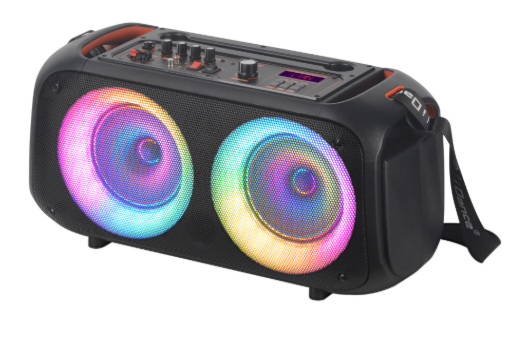
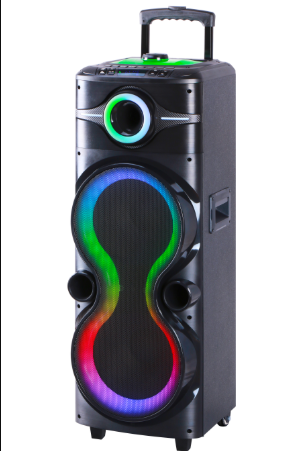
LED lights are a staple of children's karaoke machines for a good reason. They create an immersive, exciting environment that encourages participation . However, the implementation matters. Dynamic lights that sync with the music can enhance engagement without being a distraction. The key is moderation; lights should add to the ambiance, not overwhelm the primary focus, which is singing .
Certified Safety
For products intended for young children, safety certifications are not just marketing jargon; they are a legal and ethical necessity. Look for certifications like EN71 (European Toy Safety Standard) and RoHS (Restriction of Hazardous Substances) . These ensure that the materials are non-toxic, that there are no small parts that could pose a choking hazard, and that the device has passed rigorous safety testing .
2. The Adult Expectation: Vocal Clarity, Connectivity, and Control
For an adult, the karaoke experience is judged by sound quality and the seamless integration of technology. A toy-like sound is unacceptable.
Vocal Clarity Above All
As audio professionals at Gemini Sound emphasize, "vocal clarity matters most. Mic intelligibility and stability affect the fun more than headline wattage" . An adult singer wants to hear their voice clearly, with a touch of professional polish. This requires a system with independent microphone volume and echo controls. Features like a dedicated DSP (Digital Signal Processing) chip for vocal optimization, which can reduce environmental noise and enhance clarity, are a significant step up from basic amplification .
Connectivity and Content
Adults want flexibility. The system must support Bluetooth streaming for accessing millions of songs on apps like YouTube or Spotify . However, for critical audio-video sync, especially when using a TV, adults know that a wired connection (AUX or optical) is often superior to Bluetooth, which can introduce frustrating lip-sync delay . Support for USB drives and TF cards is also a practical feature for playing pre-loaded, high-quality karaoke tracks .
Robust Build and Sound Quality
While kids need a device that survives drops, adults need one that sounds good doing it. This means looking for systems with dedicated woofers and tweeters that can produce clear highs and a satisfying, albeit not room-shaking, bass . The microphone itself should feel substantial in the hand, with a metal grille that can withstand regular use, not a flimsy plastic construction that feels like it will break after one session .
3. The Perfect Compromise: Features That Bridge the Generational Divide
The magic happens when features are designed to be interpreted differently by different users.
Two Wireless Microphones: The Ultimate Enabler of Turn-Taking
Virtually every guide and review emphasizes the importance of two wireless microphones . For kids, this means no tangled cables and the ability to pass the mic quickly before attention spans wane. For adults, it enables true duets and a more dynamic performance. The wireless freedom eliminates tripping hazards and allows singers to move naturally, creating a more engaging show for everyone .
Simple, Intuitive Controls
A control panel should be a bridge, not a barrier. For a child, a large, clearly labeled knob for "Mic Volume" or "Echo" is an invitation to experiment under supervision . For a grandparent, the same knob offers easy, stress-free adjustment. Systems that offer both physical knobs (for quick, tactile control) and a more detailed touchscreen interface (for deeper settings) cater to the widest range of users . Features like a "talk-over" function, which automatically ducks the music volume when someone speaks into the mic, are also universally helpful for announcements or helping a shy singer find their starting note .
Versatile Power: The Best of Both Worlds
A rechargeable battery is perhaps the single most important feature for bridging the gap . For kids, it means the party can move from the living room to the backyard instantly. For adults, it means no hunting for an outlet and a cleaner, cable-free setup. While a unit that must be plugged in is fine for a fixed location, a battery-powered system offers the flexibility that family life demands .
4. Putting It All Together: A Buyer's Guide for Families
When evaluating a system, don't just look at the spec sheet. Ask these questions:
-
Can I control the maximum volume? Is there a simple way to set a safe, "conversation-plus" limit for the kids without affecting the adult experience later?
-
What are the microphones made of? Are they lightweight and durable enough for children, yet substantial enough to feel good in an adult's hand? Look for metal grilles and reinforced construction .
-
Does it have independent mic and music controls? This is non-negotiable for balancing a child's excited shouting with an adult's nuanced performance .
-
How do I connect it to my TV? For the best family experience, you'll likely want a wired connection (AUX/optical) to avoid lip-sync delay. Does the system support this?
-
Is it truly portable? Does it have a rechargeable battery and a comfortable handle? Can it move from the playroom to the patio without a fuss?
-
Does it have safety certifications? If children under 7 will be using it, look for EN71 or similar toy safety certifications to ensure non-toxic materials and safe design .
The memory of that disastrous family night is a stark reminder that technology designed for one user often fails when forced to serve two. A truly great family karaoke system is an exercise in empathetic engineering. It respects the child's need for safe, sensory-rich, and durable fun, while honoring the adult's desire for vocal clarity, control, and quality. When these elements come together, the living room transforms not into a battleground, but into a stage where every generation feels confident enough to sing. And that is a memory worth making.
Table of Contents
- Finding the Family Frequency: What Makes a Karaoke System Perfect for Both Kids and Adults
- The Night the Living Room Turned into a War Zone
- 1. The Kid Factor: Safety, Simplicity, and Sensory Engagement
- 2. The Adult Expectation: Vocal Clarity, Connectivity, and Control
- 3. The Perfect Compromise: Features That Bridge the Generational Divide
- 4. Putting It All Together: A Buyer's Guide for Families