
 EN
EN
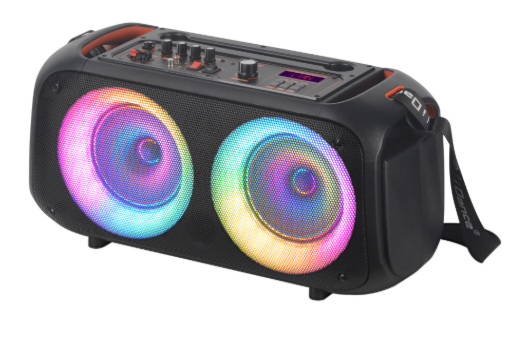
Power Output and Venue-Sized Performance
RMS vs. peak wattage: Why continuous power matters for consistent DJ speaker performance
When selecting wireless DJ speakers, prioritize RMS (Root Mean Square) wattage over peak wattage. RMS measures continuous power handling—critical for sustaining sound quality during extended sets. Peak wattage reflects only brief bursts and is often inflated in marketing; a speaker rated at 500W peak may deliver just 150W RMS, risking distortion and audio breakup at 90dB SPL. Research shows that operating below 60% of RMS capacity keeps Total Harmonic Distortion (THD) under 1%, preserving sonic integrity across long performances.
Matching wireless DJ speaker output to space: Indoor clubs (300–600W RMS) vs. outdoor festivals (800W+ RMS)
Venue size dictates power needs due to fundamental acoustic behavior: indoor spaces benefit from natural reverberation, making 300–600W RMS ideal for 200–500-person clubs. Outdoors, sound dissipates rapidly—requiring 800W+ RMS for equivalent coverage. Environmental factors like wind increase power demands by 25–40% compared to indoor venues of the same size. Below 300W RMS, bass response collapses beyond small rooms; 1000W+ systems maintain clarity and impact for audiences of 500+ even amid ambient noise.
Battery Life, Portability, and Rugged Outdoor Readiness
Real-world battery endurance: How 15–20 hours translates to back-to-back sets and load-in logistics
A 15–20 hour battery life enables DJs to run back-to-back sets without mid-event charging—streamlining load-in, setup, and teardown. This endurance supports multi-hour events while active power management prevents unexpected shutdowns during peak usage. High-capacity batteries sustain consistent output across long sessions, and integrated handles enhance portability between venues. The result is reduced downtime, smoother event flow, and professional reliability.
IP ratings decoded: Why IP55 or higher is essential for dust, rain, and festival-grade durability
IP (Ingress Protection) ratings quantify resistance to environmental hazards. For outdoor DJ use, IP55 or higher is essential—providing certified protection against low-pressure water jets and airborne dust. These ratings are validated through standardized tests simulating real-world stressors: rain, humidity, and debris common at festivals or dusty fields. Lower-rated units risk moisture or particle intrusion, leading to component failure and compromised sound. Robust IP compliance ensures operational safety, longevity, and uninterrupted performance in unpredictable conditions.
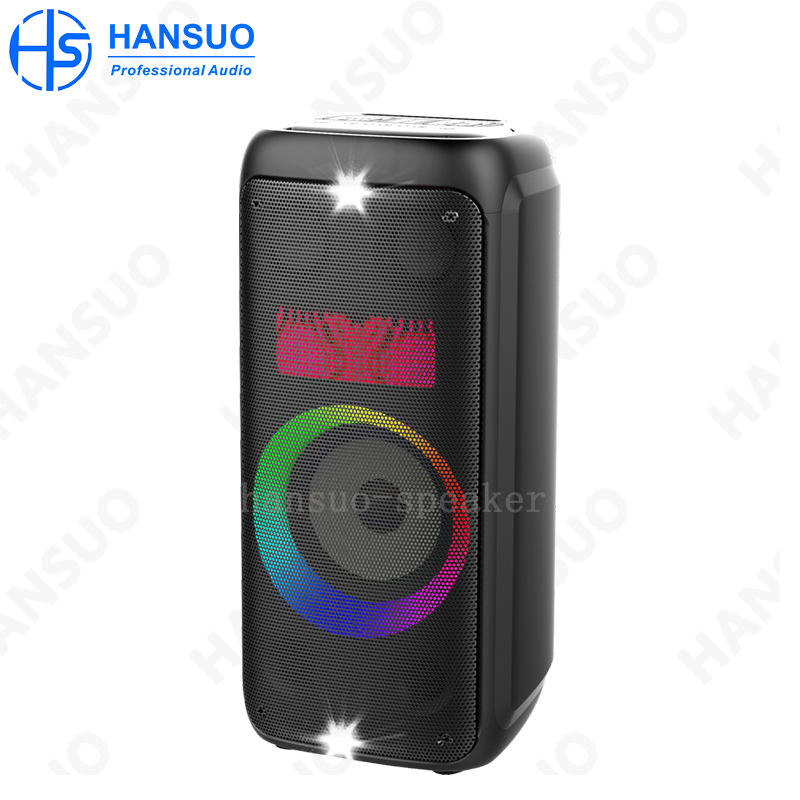
Reliable Wireless Connectivity for Live DJ Use
Bluetooth 5.3 advantages: Lower latency, dual-device pairing, and interference resistance in crowded venues
For live DJ use, seamless wireless connectivity is non-negotiable—and Bluetooth 5.3 delivers measurable professional advantages. Its latency drops below 40ms, eliminating perceptible lag during beatmatching (where delays over 200ms disrupt timing). Dual-device pairing adds redundancy, allowing simultaneous connections to a primary mixer and backup smartphone or tablet—ensuring continuity during equipment failures. Crucially, adaptive frequency hopping scans for congested channels up to 1,600 times per second, dynamically avoiding interference in RF-dense environments like festivals or multi-venue complexes. These features elevate wireless DJ speakers from convenience tools to dependable performance gear—provided manufacturers publish verified latency specs.
Sound Quality That Holds Up Under DJ Workloads
Bass Realism: Driver Size, Passive Radiators, and Cabinet Tuning — Beyond Headline Specs
True low-frequency performance hinges on three physical design elements often glossed over in marketing: driver size, passive radiators, and cabinet tuning. Woofers of 10 inches or larger move sufficient air for club-level sub-bass extension down to 40Hz; smaller drivers falter below 50Hz. Passive radiators amplify bass response by 3–5dB without taxing amplifier headroom—delivering visceral kick-drum impact. Cabinet tuning shapes character: ported designs boost efficiency but risk boominess; sealed enclosures offer tighter, more controlled lows ideal for techno or hip-hop. Prioritizing this synergy ensures authentic bass reproduction—not artificial hype.
Clarity at Volume: Why THD <1% at 90dB and Dynamic Headroom Matter More Than Frequency Range Claims
At venue-filling volumes, measurable performance metrics outweigh theoretical specs. THD under 1% at 90dB prevents harshness and listener fatigue—the threshold where human hearing detects distortion. Many speakers advertise wide frequency ranges (e.g., 20Hz–20kHz), but those specs collapse under real-world load. Dynamic headroom—typically 6dB or more—ensures clean transient response: snare cracks and vocal peaks remain articulate even during bass-heavy drops. Unlike abstract frequency claims, THD and headroom directly correlate with fidelity under demanding DJ workloads.