
 EN
EN
Hidden Power Drains That Shorten Trolley Speaker Runtime
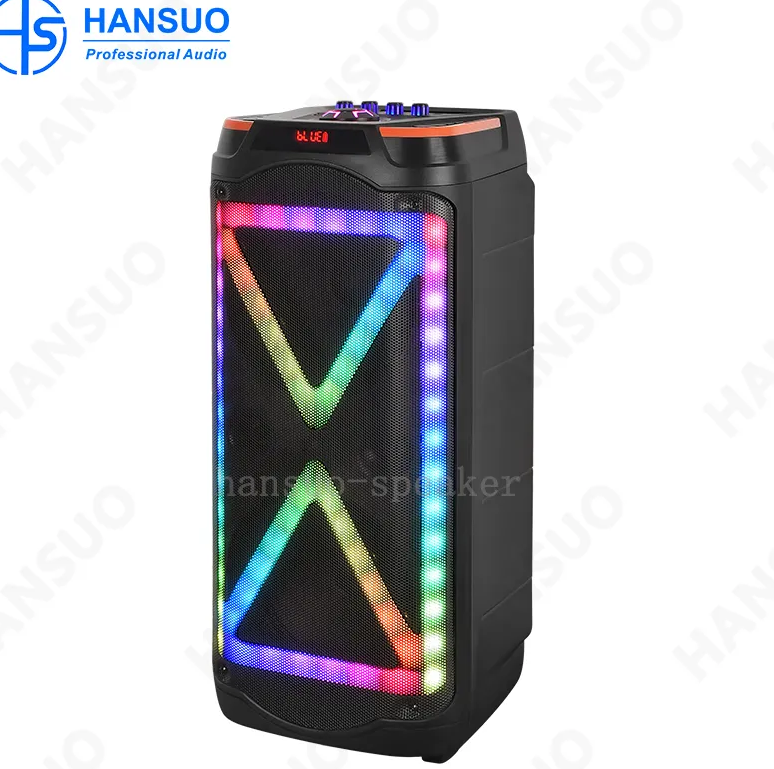
Trolley speakers serve core demands for street sales outdoor parties wedding events and commercial rental businesses, yet most operators fail to spot invisible power waste that drastically cuts single charge working time. Constant maximum volume output sustained Bluetooth wireless standby and over bright decorative RGB lights form three primary hidden power drains inside trolley speaker circuits. IEC62680 standard test records for portable audio equipment prove long term peak sound output increases instantaneous current consumption by more than sixty percent, accelerating lithium cell capacity attenuation. The technical service team of Hansuo sorted thousands of after sales feedback from global distributors covering Southeast Asia the Middle East and Africa, finding over seventy percent of short runtime complaints stem from uncontrolled idle power consumption instead of defective battery hardware. Many event rental operators keep Bluetooth signal active all day even without audio input and maintain full light brightness during daytime outdoor use, draining half the stored power within three hours. Premium trolley speaker models from Hansuo integrate intelligent battery management chips to limit unnecessary standby current, but users still need to master daily power control logic to fully extend single charge endurance. Ignoring these trivial power wasting details leads to frequent mid event power outage and extra battery replacement expenditure for long term commercial users.
Standardized Charging Habits Protect Lithium Cell Health
Lithium battery cycle lifespan directly decides long term trolley speaker service cost, and irregular charging behaviors create irreversible damage to internal cell structures. Complete power depletion before charging long time overcharging and mismatched non certified chargers all trigger internal electrode deformation and capacity loss. National audio equipment safety standard GB4943.1 together with RoHS component requirements clearly define matched voltage and current parameters for portable trolley speaker charging equipment. A commercial event rental client shared obvious cost improvement after adjusting full set charging rules. The firm previously charged trolley speakers until midnight after each event and often used third party low voltage adapters, replacing one third of all speaker battery packs every six months. After switching to original factory matched chargers and stopping overcharge operation, battery failure volume dropped below eight percent in one year. Suitable charging timing requires users to plug in power when remaining power hits twenty five to thirty percent and cut power once full indicator lights activate. Charging environments need to maintain cool dry ventilation space, avoiding direct sunlight or closed hot storage rooms that raise battery temperature during energy replenishment. Following fixed charging standards slows cell aging and doubles the effective usable cycle count of built in lithium packs.
Reasonable Function Adjustment Reduces Instant Power Load
High instantaneous current generated by full volume and extra decorative functions creates heavy load pressure on trolley speaker lithium batteries, speeding up internal chemical aging process. Independent consumer electronics energy test labs published comparative data showing trolley speakers running at moderate fifty to seventy percent volume extend runtime by nearly double compared with sustained maximum volume output. Bright RGB strip lights extra wireless microphone receivers and built in power amplifiers all draw extra electric current continuously during operation. Street vendors who use trolley speakers for eight hour daily outdoor promotion can adjust light brightness to low mode and turn off unused wireless channels to cut daily power consumption significantly. Event hosts holding all day outdoor performances can switch volume to medium range during background music playback and only raise volume for short speech segments to avoid long term heavy battery load. Continuous large current discharge pushes battery internal temperature to rise, forming cumulative damage that lowers total storage capacity year by year. Simple function tuning operations bring immediate runtime improvement without any hardware modification or extra procurement investment for all trolley speaker users.
Appropriate Storage Methods Slow Natural Battery Degradation
Many trolley speaker owners suspend use for weeks or months during off business seasons, and improper storage conditions lead to silent lithium battery self discharge and permanent capacity decline. High temperature direct sunlight damp warehouse air and long term full power or zero power storage all damage internal cell stability. Global lithium ion battery operation guidelines recommend long term idle trolley speakers to be stored with forty to sixty percent residual power under fifteen to twenty five degree dry environment. Retail shop operators from tropical market regions shared consistent experience after optimizing storage routines. Previously they placed fully charged trolley speakers inside closed glass display windows exposed to strong sunshine, and nearly one quarter of stored units lost twenty percent capacity after one month off season storage. After moving products to cool ventilated stock rooms and adjusting storage power level, battery decay speed reduced greatly. All trolley speaker models from Hansuo carry built in low power dormancy mode that automatically cuts unnecessary circuit current after ten minutes of no signal input, further minimizing self discharge loss during idle placement. Regular short supplementary charging every two months for long stored equipment maintains stable cell activity and avoids premature battery scrapping.
Routine Hardware Inspection Avoids Abnormal Power Loss
Hidden circuit faults including loose charging port contacts dirty metal terminals and aging internal wiring create invisible power leakage even when trolley speakers stay on standby. BSCI audio equipment maintenance standards require quarterly basic hardware inspection for frequently used commercial trolley speakers. Users can complete simple self checking steps without professional testing tools to eliminate abnormal power loss risks. First wipe charging port metal contact points with dry soft cloth to remove dust and oxide layers blocking stable power transmission; second observe outer shell for cracks that let moisture seep into internal circuit boards; third power on the unit without connecting audio signal to check if lighting and Bluetooth modules shut down normally after idle time. A large street market equipment wholesaler found multiple batches of trolley speakers suffering fast power drain caused by stained charging jacks after long outdoor exposure. Regular surface cleaning and simple circuit observation eliminate leakage faults before they cause obvious runtime shortening. Timely minor inspection reduces expensive internal circuit maintenance and delays large scale battery replacement plans for commercial trolley speaker users.
Built In Battery Technology Supports Long Term Stable Use
All practical battery extending methods work better when trolley speakers adopt mature standardized built in power systems, a core advantage carried by all trolley and portable audio products developed by Hansuo. The brand owns ten years specialized audio research and manufacturing experience operating a three thousand square meter standardized factory, holding twenty six independent patents including multiple battery protection circuit designs. Full series trolley speakers boomboxes and outdoor portable audio devices pass CE RoHS BSCI ISO9001 ISO45001 SA8000 international certification, with intelligent BMS battery management circuits preinstalled inside every unit to restrain overcharge over discharge and overcurrent risks. The enterprise supports flexible OEM ODM SKD customized development for global wholesalers covering more than fifty countries, supplying mass ready stock with fast sampling and short delivery cycles. Professional R&D teams optimize internal power consumption layout for commercial trolley speaker scenarios combining long standby demand and stable output performance. Equipped with complete pre delivery battery aging testing procedures, Hansuo delivers trolley speakers with consistent lithium pack stability, letting global business owners combine standardized daily maintenance and factory built power protection technology to maximize single charge runtime and extend overall equipment service life.
Table of Contents
- Hidden Power Drains That Shorten Trolley Speaker Runtime
- Standardized Charging Habits Protect Lithium Cell Health
- Reasonable Function Adjustment Reduces Instant Power Load
- Appropriate Storage Methods Slow Natural Battery Degradation
- Routine Hardware Inspection Avoids Abnormal Power Loss
- Built In Battery Technology Supports Long Term Stable Use